
Many Hands, Fewer Egos
“Problems are only opportunities with thorns on them.” — Hugh Miller
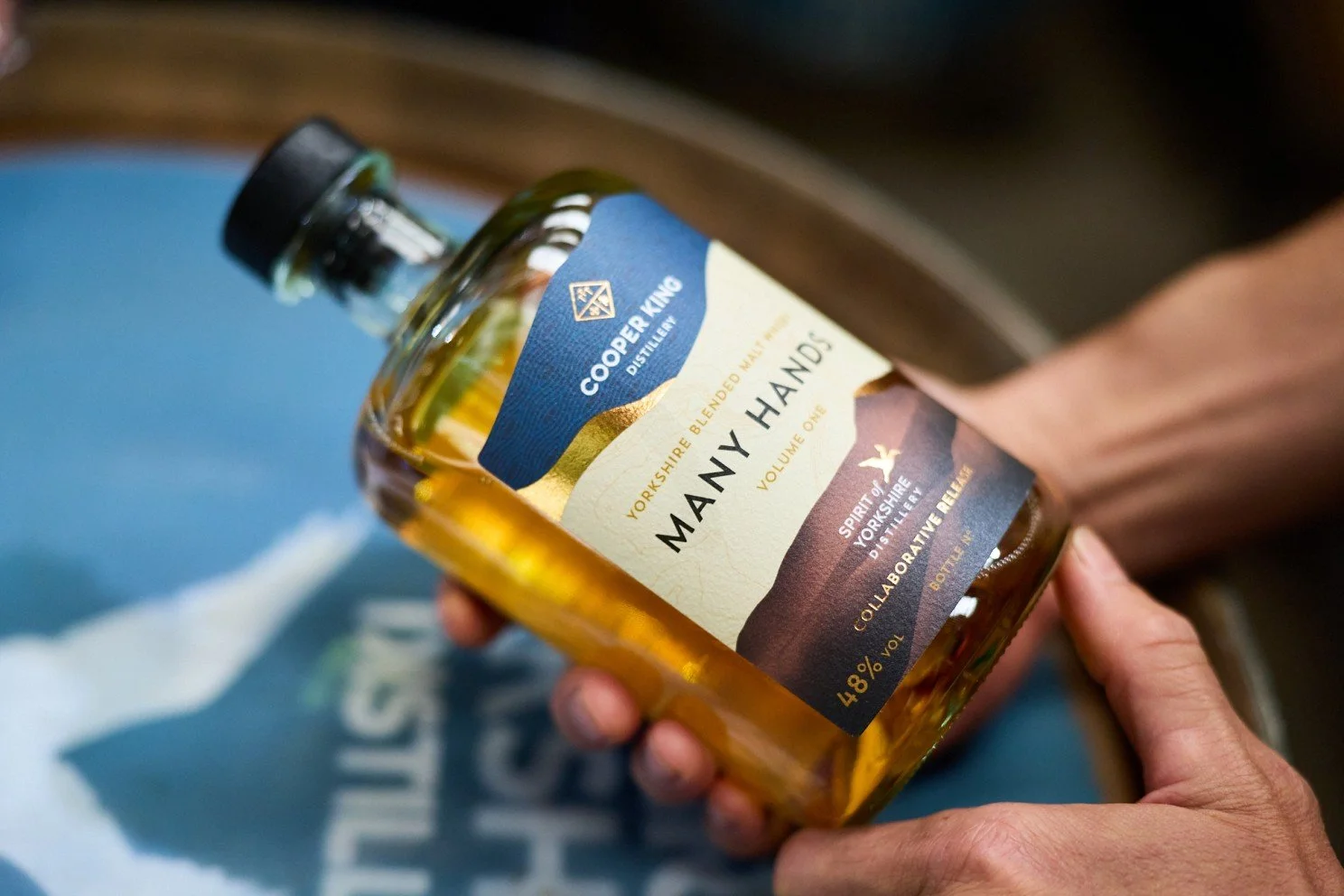
In 2021, the pot still at Cooper King Distillery broke down and had to be sent away for repairs.
Like a footballer without boots or a photographer without a camera, that’s quite a limiting turn of events. Terrifying, even. No still, no spirit. No spirit, no casks. No casks, no whisky in three, five, eight years’ time. A nine-month hole in their mature stock down the line - something few distilleries can carry, let alone in a downturn.
As Hugh Miller may or may not have said, that’s not a problem but an opportunity with thorns. This post is a shout out to Cooper King for delivering a master stroke in carpe-ing the diem.
They could have eaten the loss and hoped nobody noticed the gap in the release schedule (anyone who has even heard of an accountant knows this wouldn’t be an option). They could have quietly paid someone to fill the gap and never speak of it again. Blending away the different distillery character and putting it down to any number of factors.
Or they could fill the gap and turn it into a story of collaboration, of English whisky, and of creativity through adversity. Probably also something to keep the bean-counters happy too.
Cooper King asked, Spirit of Yorkshire said yes. The result, released this summer after five years under wraps, is Many Hands — the first Yorkshire blended malt whisky, and the first whisky created through an open collaboration between two English distilleries. 1,922 hand-filled, individually numbered bottles.
Why do I love this so much?
English whisky is not yet a category in the way Scotch is a category. It is closer to a coalition — several dozen producers, most of them young, most of them still explaining to a sceptical drinker at a bar why the words “English” and “whisky” belong in the same sentence. In that environment, the competitive instinct is almost entirely misplaced (something I’ve seen through my work on Ad Gefrin). Cooper King and Spirit of Yorkshire aren’t fighting over a fixed pool of Yorkshire whisky drinkers, they’re jointly trying to convince people that English whisky drinkers should exist at all.
A rising tide lifts all ships. And collaborations like this do a solid amount of work in raising that tide. Now more than before, the person who has a great experience with Spirit of Yorkshire on a Tuesday is absolutely more likely to take a punt on Cooper King on a Friday. And so on.
Cooper King put it well themselves: in most industries the people down the road making the same product are your rivals but the camaraderie of the whisky industry is second to none (they haven’t explicitly said this but I imagine when your close northerly neighbour is also THE most famous producer in the world of that product and is meddling with your GI application, then banding together also helps.) What’s unusual about this - and what I love so much - is that they decided the camaraderie was worth showing to drinkers rather than just enjoying among themselves or keeping to throwaway comments on distillery tours or at trade shows. Most industry goodwill happens invisibly — the borrowed kit, the shared supplier contact, the phone call at 11pm about a stuck fermentation. It normally doesn’t reach the bottle or the marketing team.
That it did on this occasion brought such a smile to my face.
What I also like about this (because I’m a whisky geek as well as a PR guy) is the transparency of product and approach. They didn’t just buy the spirit and stir it in. They matched the Spirit of Yorkshire distillate with Cooper King and matured it in the same casks, so they could marry like-for-like casks containing distinct distillery character. That’s fun! And is basically a science experiment in flavour alongside tasty spirit (one assumes).
Cooper King’s floor-malted Maris Otter against Spirit of Yorkshire’s Laureate; five-to-seven-day ferments against three-to-four; a 900-litre pot still against a 5,000-litre wash still running with a rectifying column. Everything else held constant. That’s absolute catnip to a whisky geek.
The result, per head distiller Abbie Jaume, is Spirit of Yorkshire’s honeyed, herbal notes against Cooper King’s layers of fruit and toasted nut. You can only get that whisky this way.
I suppose what’s coolest about this is that nothing obliged Cooper King to tell us any of this. They sat on it for five years. Contract-filled spirit and quiet reciprocal arrangements are not exactly unknown in this industry, and “Yorkshire blended malt” would have raised precisely zero eyebrows arriving without the backstory. The path of least resistance was to say nothing and let the liquid speak.
Instead, the whole thing is named after the failure and the spec sheet documents the production methods and cask breakdown for each distillery separately, so you can see exactly who contributed what. It even cheerfully records the mid-run heating upgrade that came out of the episode. How many of us wish a bad day at work could turn into such a fun project? Certainly I do (as someone who once emailed a client complaining about that exact client - check your CC box kids).
Admitting failure is a tricky thing to do for anyone, not least a young distillery in a nascent category. Turning it into a story is the kind of agility that a young distillery in a nascent category can run with. And it’s lovely to see.
If I’d been in the room for this, I would have pushed them a little bit on packaging. The story is so cool but it needs telling. Making something visual out of it would have brought another of the senses into proceedings. A half and half label, or Cooper King language in Spirit of Yorkshire branding - or vice versa. Something that shows people and invites them to ask more.
Regardless, hat tip to the both of them. More stories like this, please.
